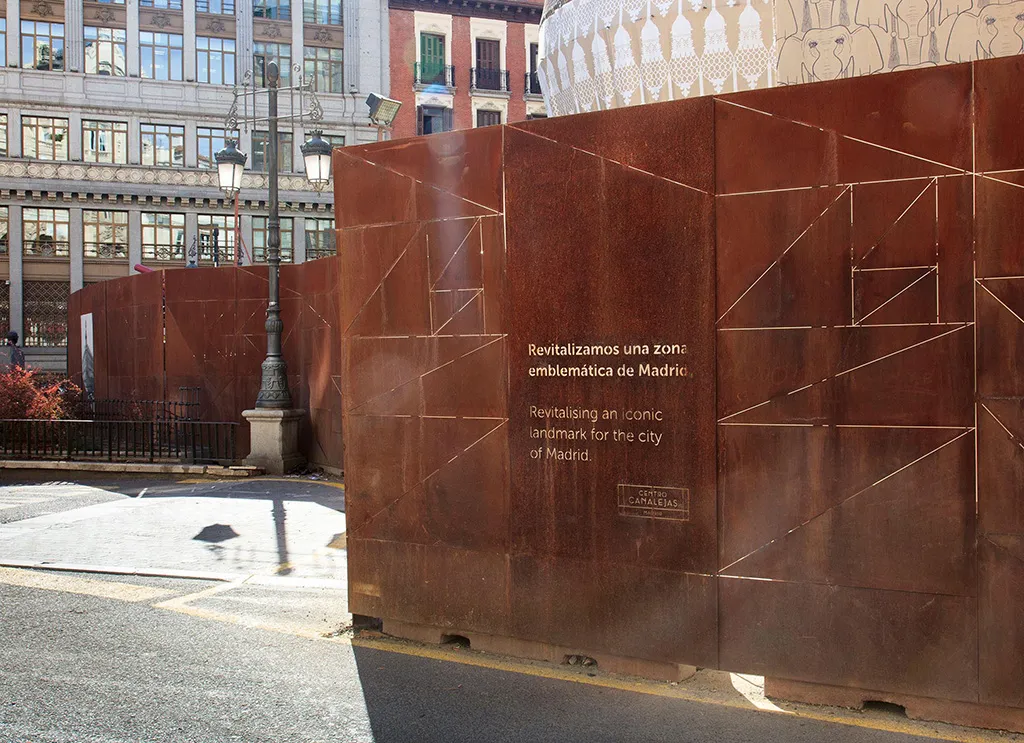
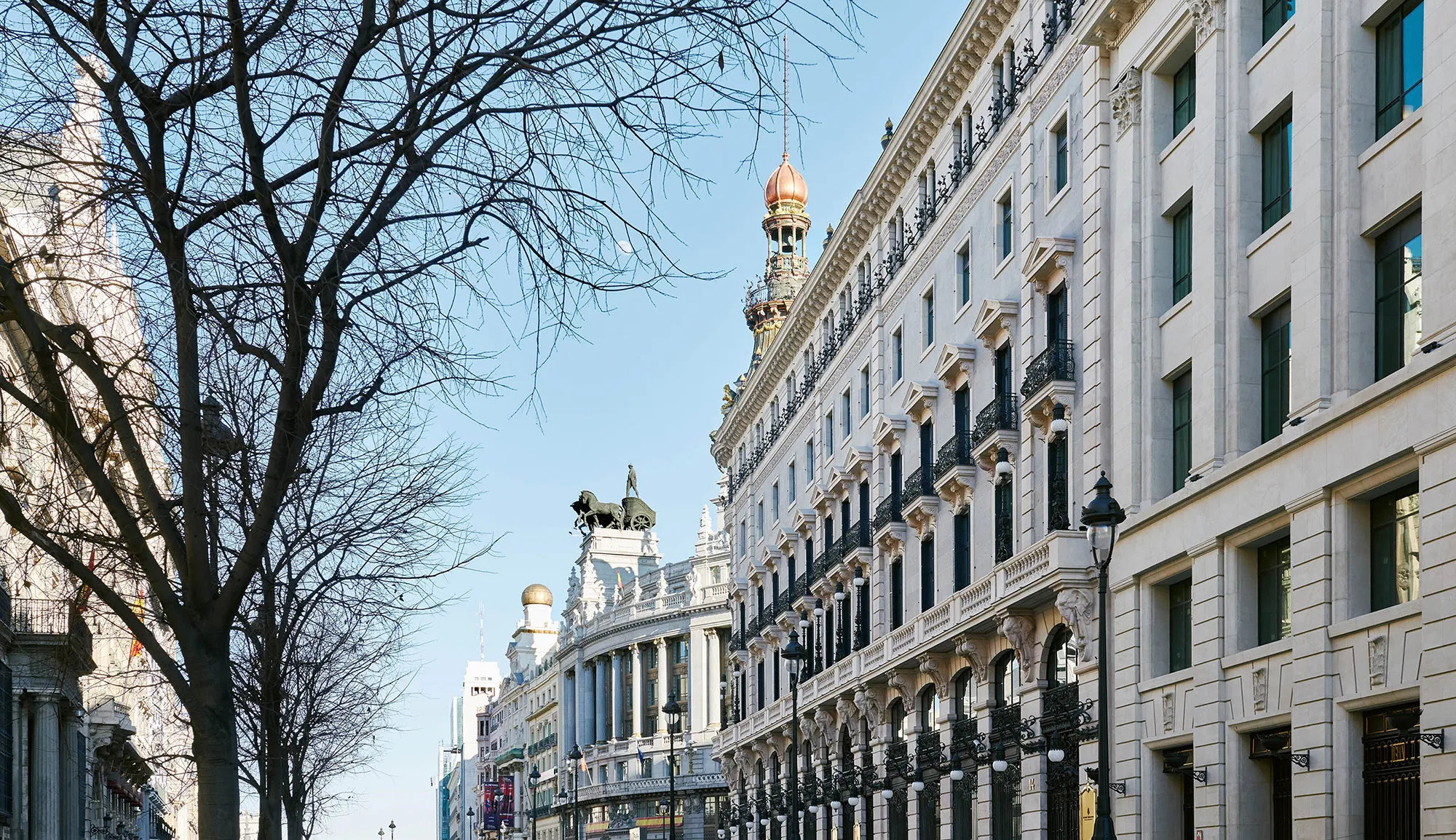
An engineering and architectural project
Restoring a historic building is always a challenge. Restoring seven at once is a dream come true with Centro Canalejas Madrid
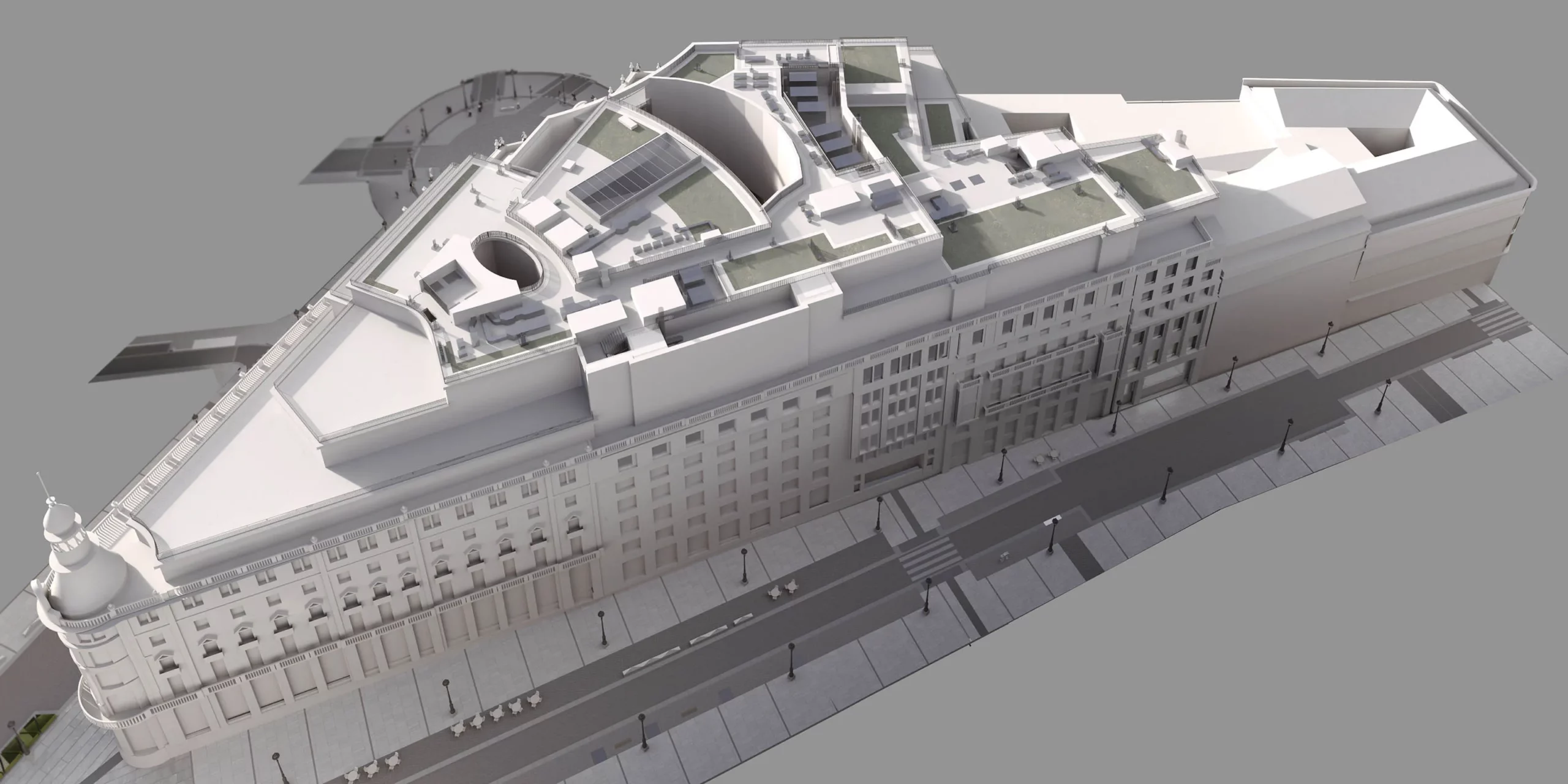
An ambitious urban regeneration project that combines the refurbishment of the exterior with a new interior layout designed as a unified whole, despite its fragmented origins, incorporating a variety of uses.
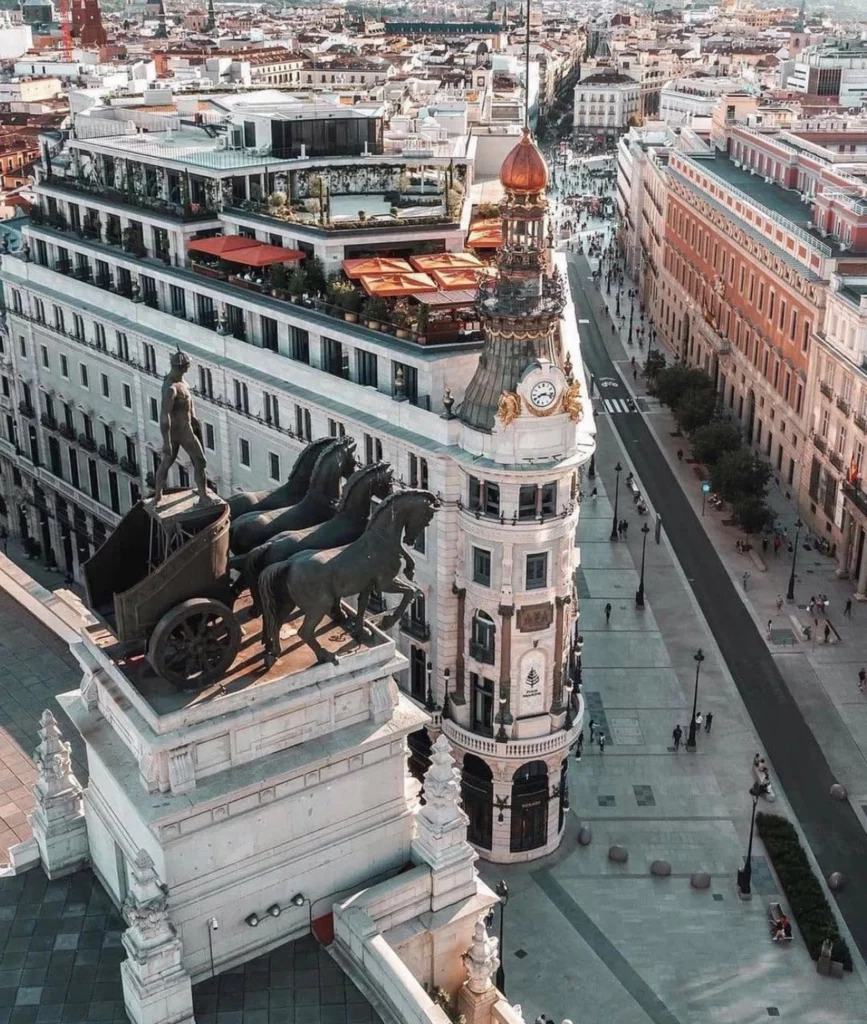
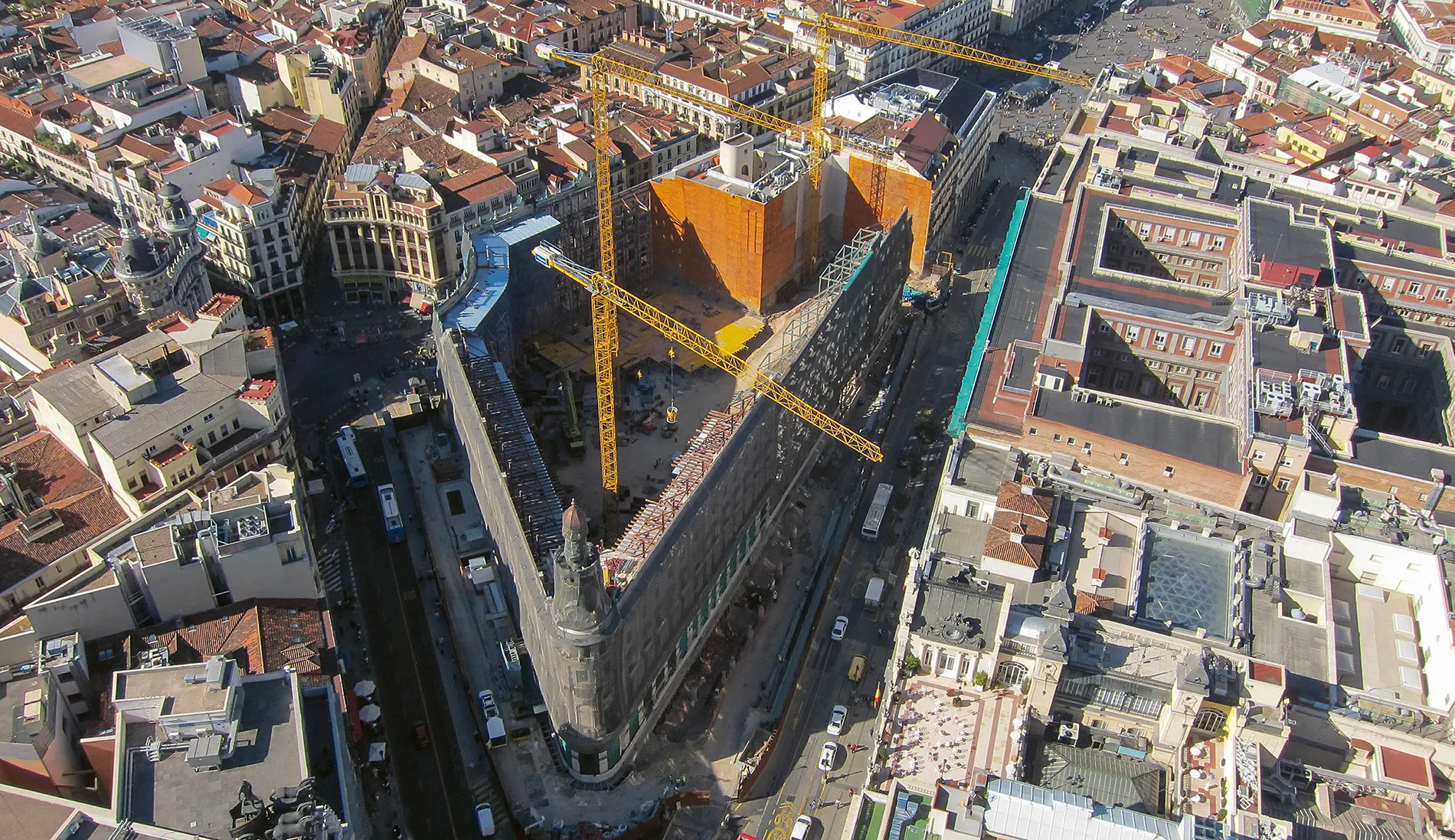
An architectural challenge involving a high degree of complexity in terms of design, planning and execution
The location, in the heart of a major city, the need for swift execution, and the redesign of the visual space to minimise the impact on the surroundings are three factors that have added a great deal of complexity to the work, as has the need to bring together the various uses within a single complex, whilst preserving the seven façades and the first bay of two of the buildings, as required by the heritage protection regulations applicable to BIC (Asset of Cultural Interest) buildings.
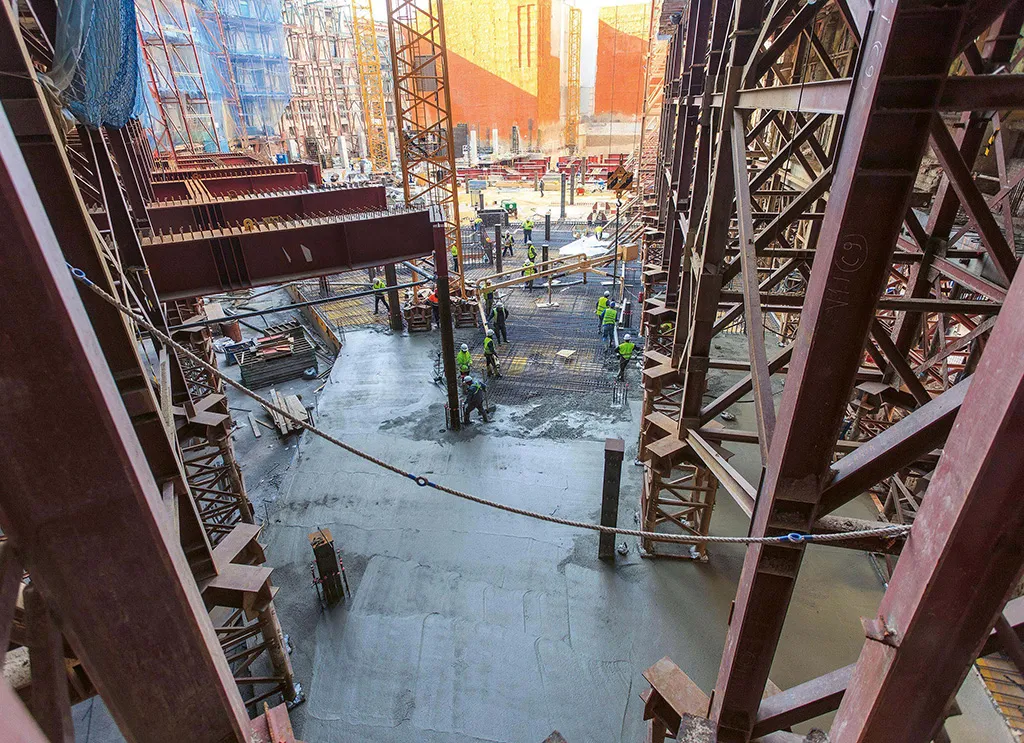
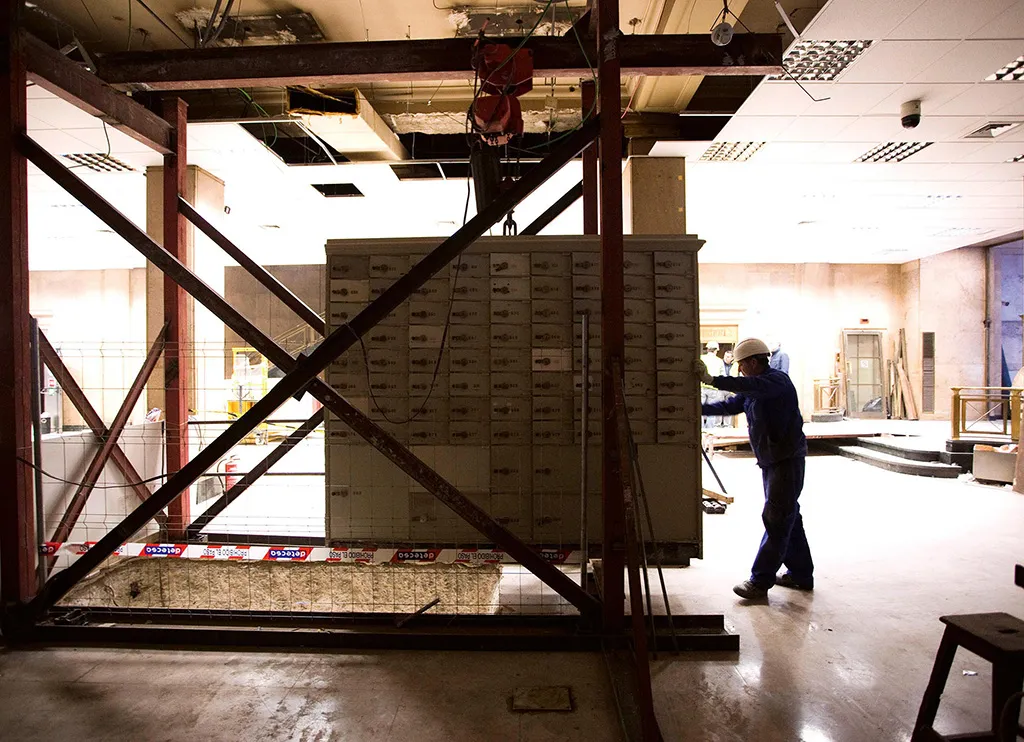
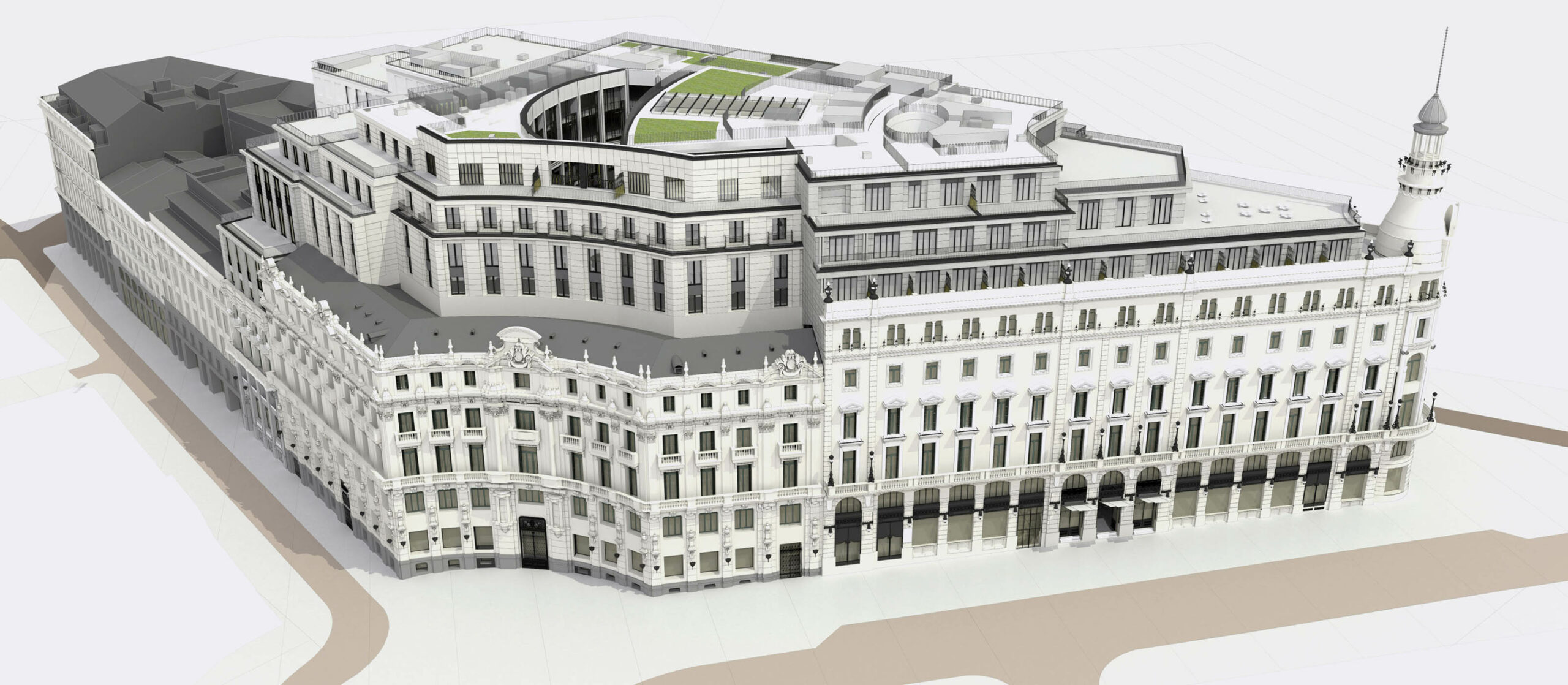
An ambitious urban regeneration project that combines the refurbishment of the exterior with a new interior layout designed as a unified whole, despite its fragmented origins, integrating en ella diversos usos.
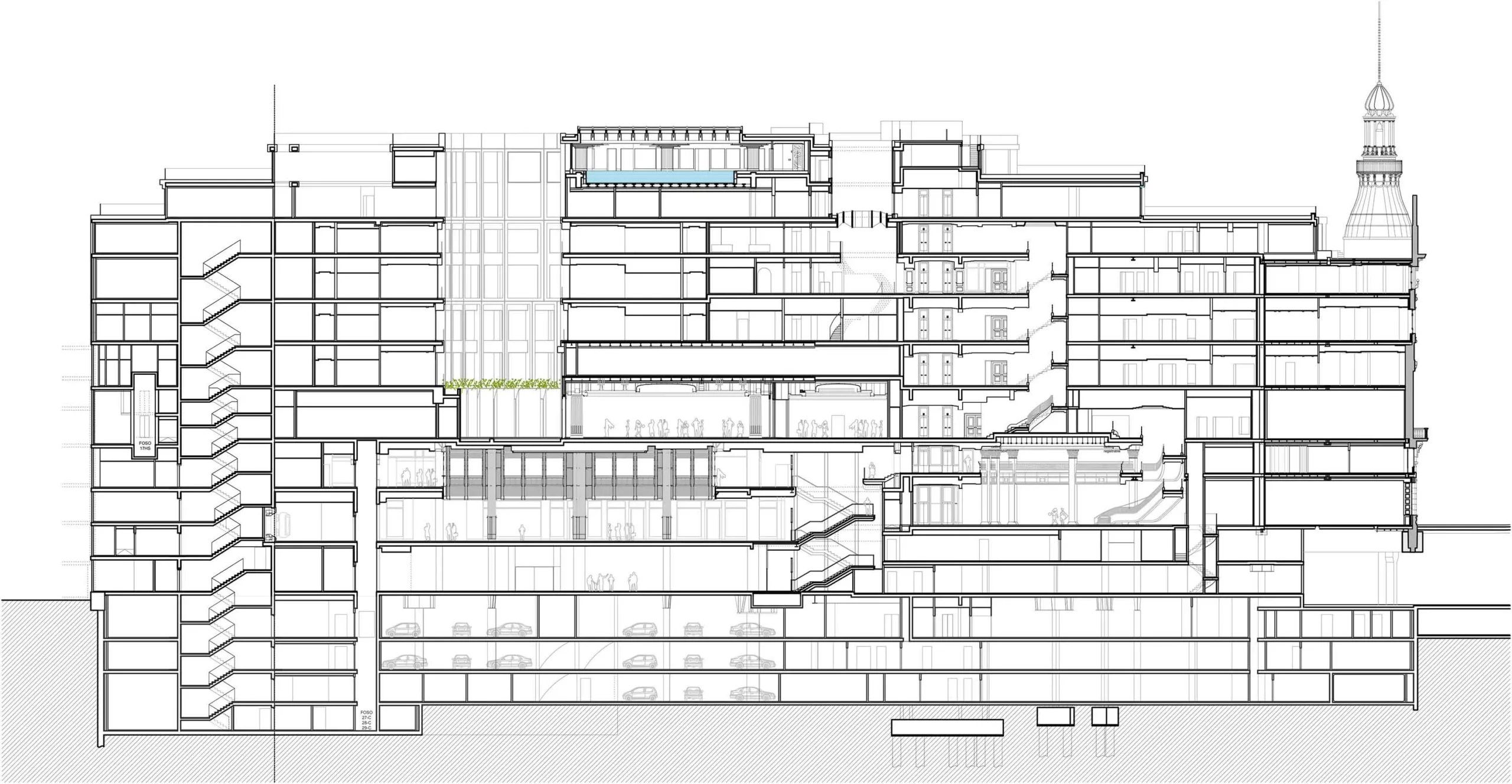
The functional plan for the entire block sets out the layout and access points for the following distinct uses: a hotel, residential units, a shopping arcade and a car park. The complex comprises nine storeys above ground and five below ground.
Hotel
Viviendas
Galería comercial
Aparcamiento
The surroundings of Centro Canalejas Madrid
The developer undertook the cost and execution of the works to improve the pavements, the underground infrastructure and the Seville metro station.
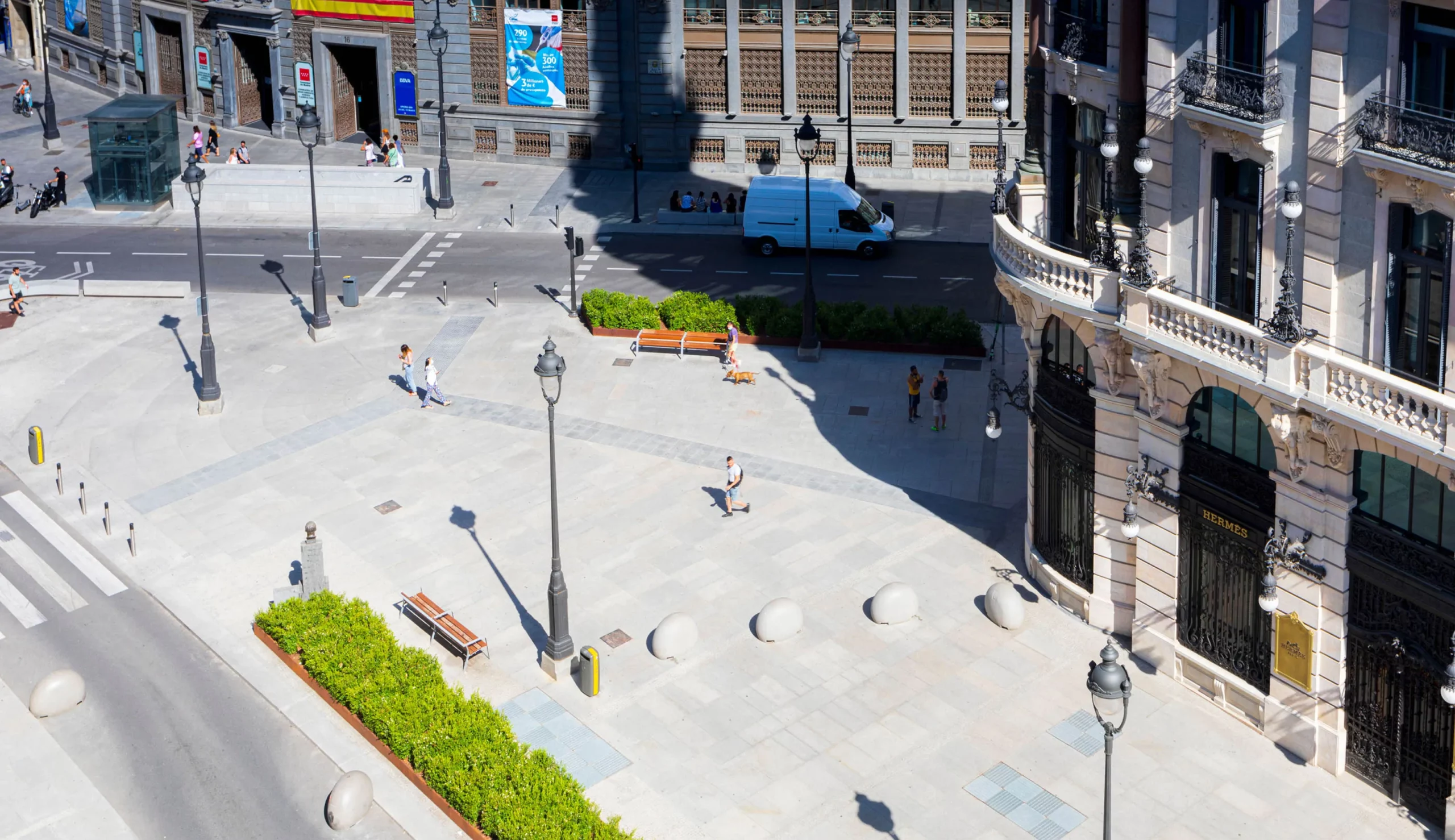
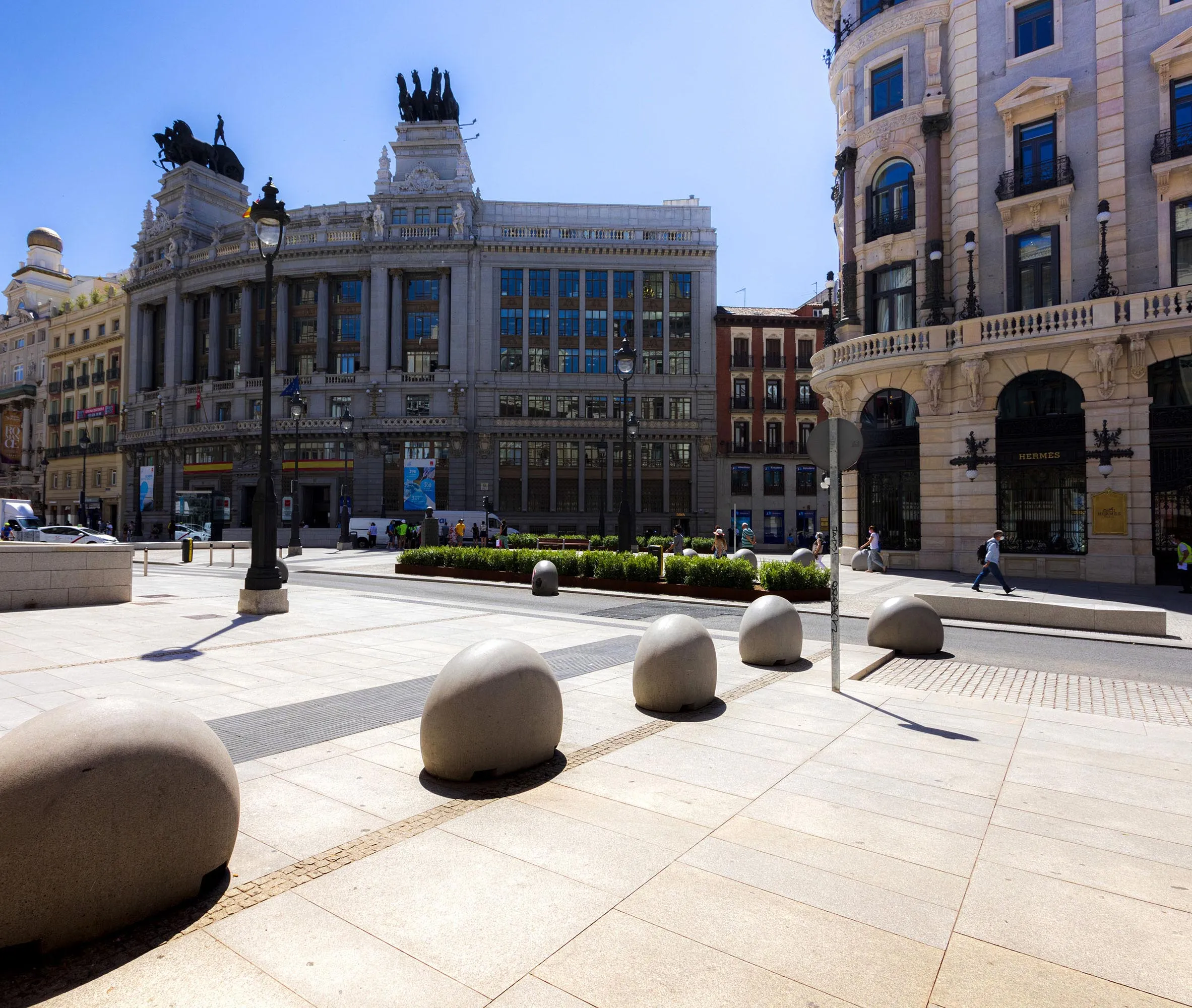
The developer, Centro Canalejas Madrid, covered the costs and oversaw the renovation of the entire urban environment along Alcalá and Sevilla streets, including sidewalks, streetlights, street furniture, and landscaping. The materials used—particularly granite and wood—are in keeping with the 19th-century architecture and the significance of the buildings and their surroundings. In terms of scale, this is a significant project, as a total of 7,900 m² was paved with 8-cm-thick Spanish granite tiles. Sixty-four historic streetlights were also replicated, the originals of which are located in Buen Retiro Park.Show full biography
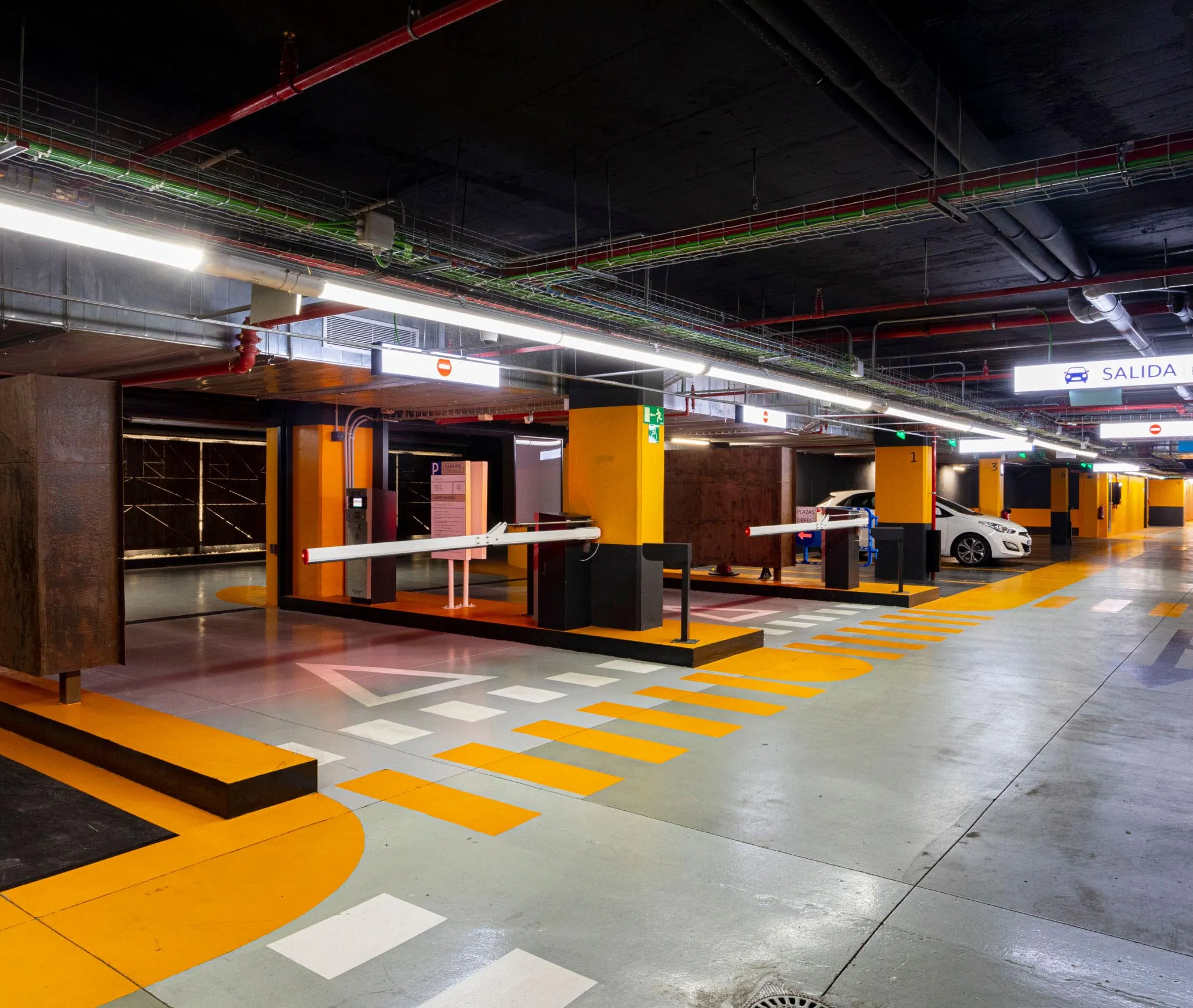
As for the underground infrastructure, the Canalejas 360 hub, currently managed by the City Council, is located on level -1. A total of 5,300 m² of floor space was built, which currently serves as a charging point for a total of 50 electric vehicles.
Centro Canalejas Madrid also funded the construction of the new metro station in Seville and the renovation of the Line 2 tunnel leading to Sol Station, improving accessibility for passengers through the installation of elevators and the modernization of the architecture and facilities.
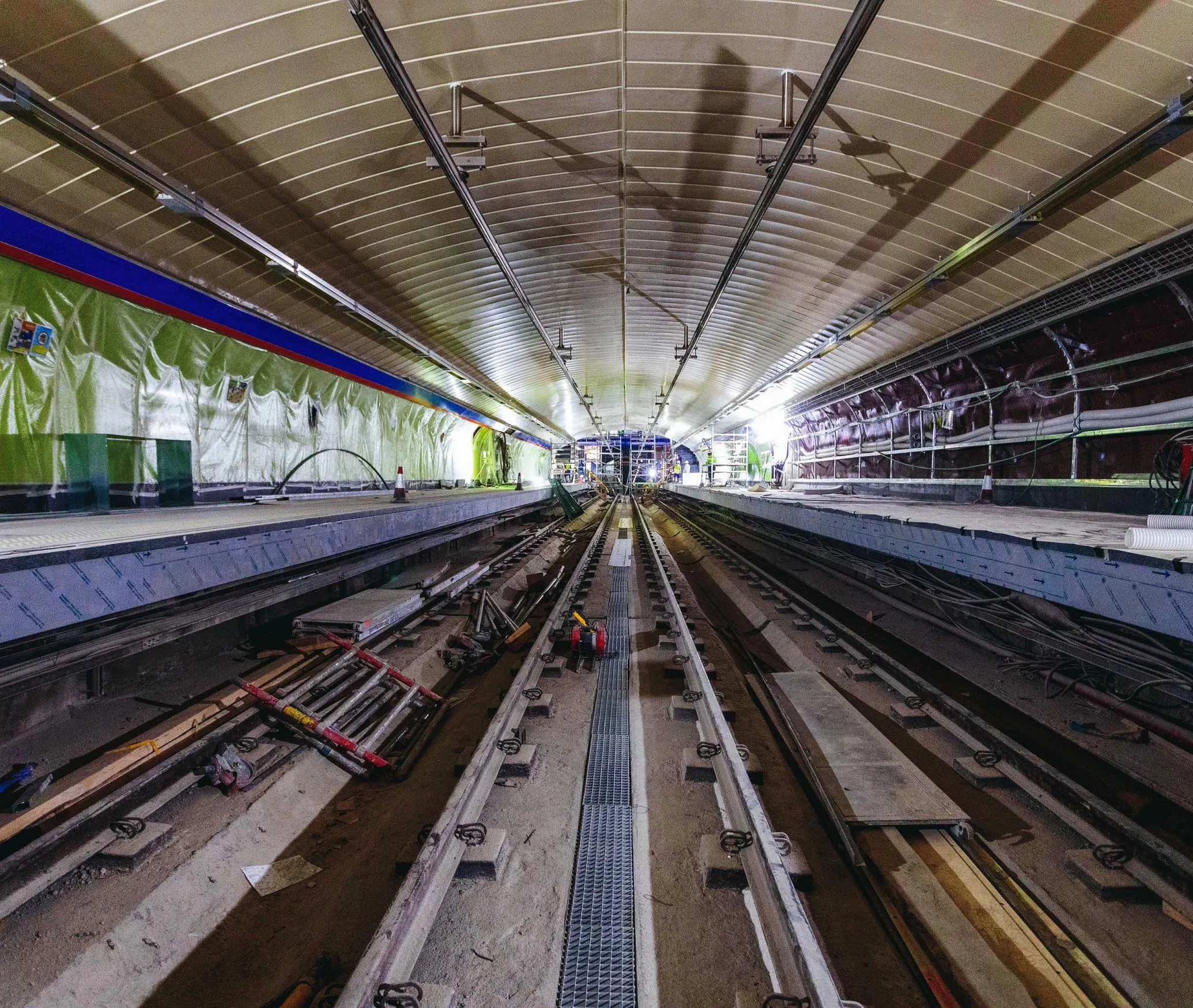
The total cost of all these projects amounted to €43.5 million, and they were completed in early 2020.
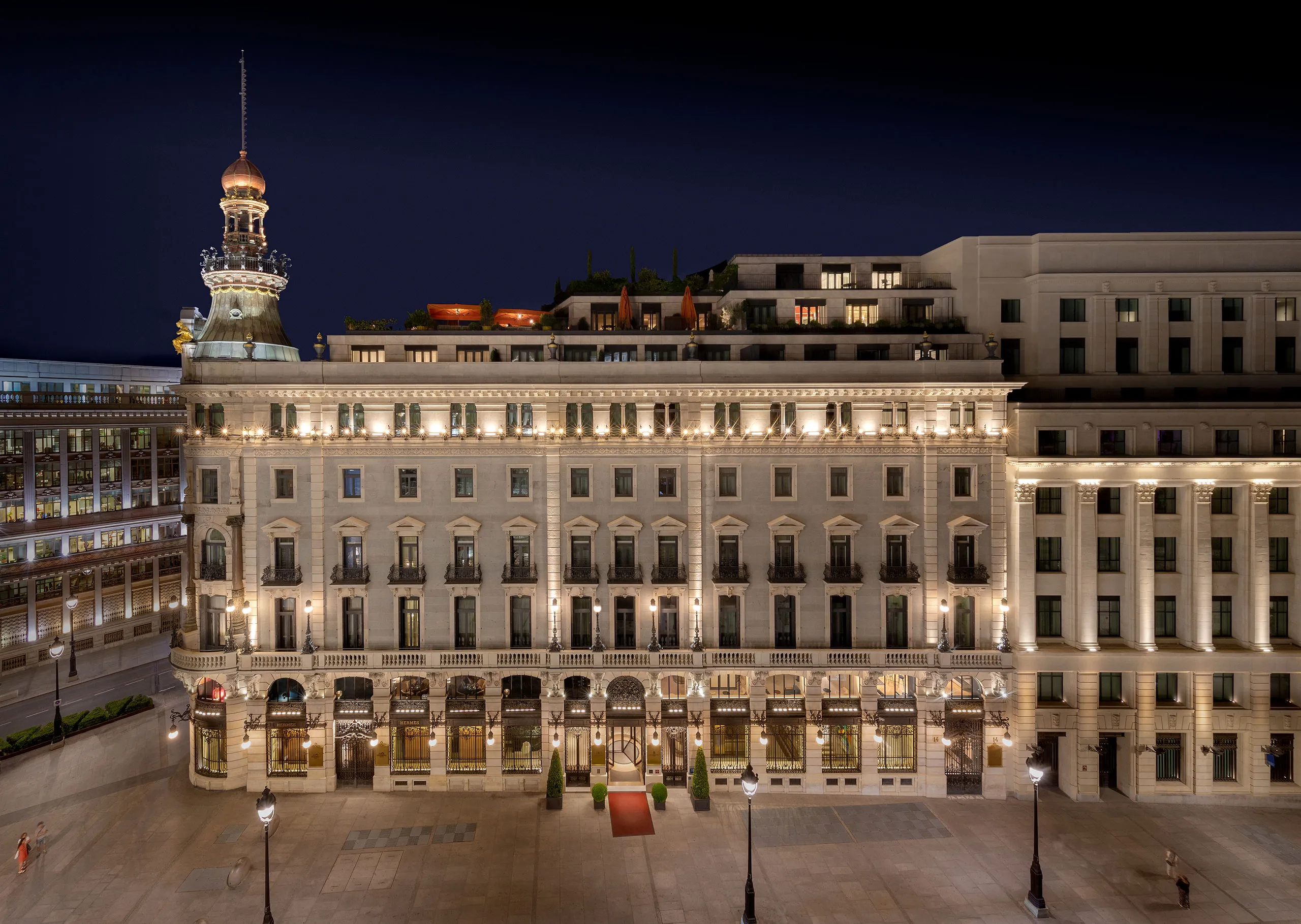
The incorporation of historical elements into a cutting-edge project
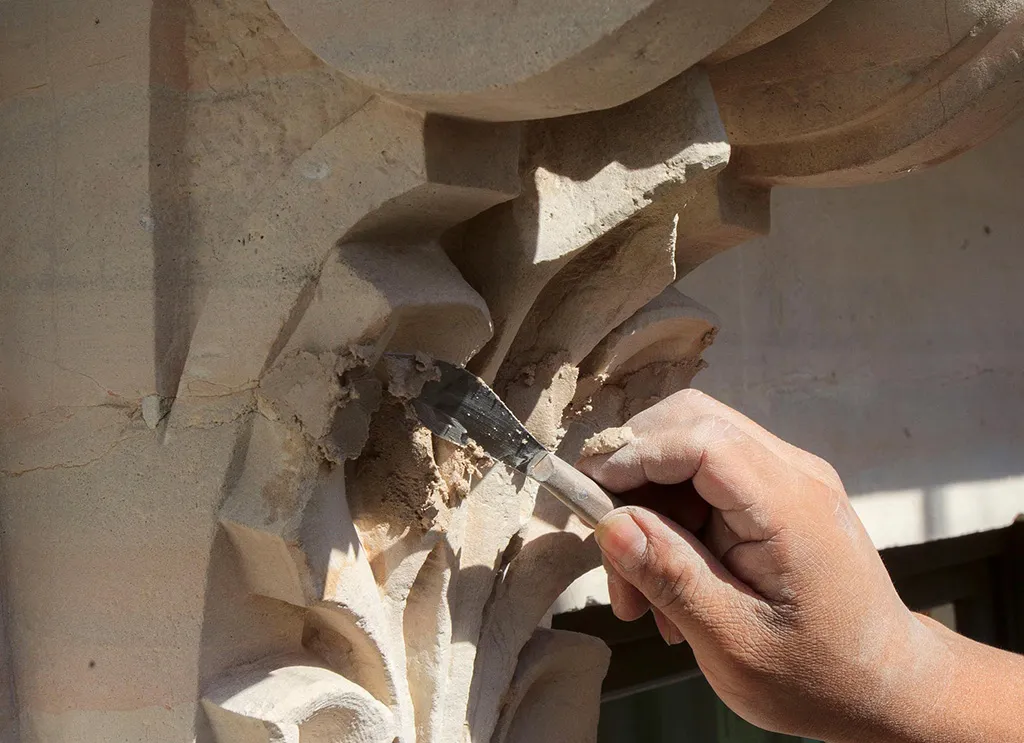
Around 8,000 square metres of façade have been restored to preserve the city’s historical and architectural heritage. In addition, more than 16,000 historical artefacts have been catalogued, and most of them have been salvaged and carefully restored using traditional craft techniques—some of which had almost been lost—and brought back to life for the occasion.
The aim was to restore the unique character and original features of each and every ornamental element; to this end, a great deal of effort has been put into the analysis and restoration of stained-glass windows, marblework, railings, lamps, slate roofs and other features that warrant protection due to their historical, artistic and/or architectural value.
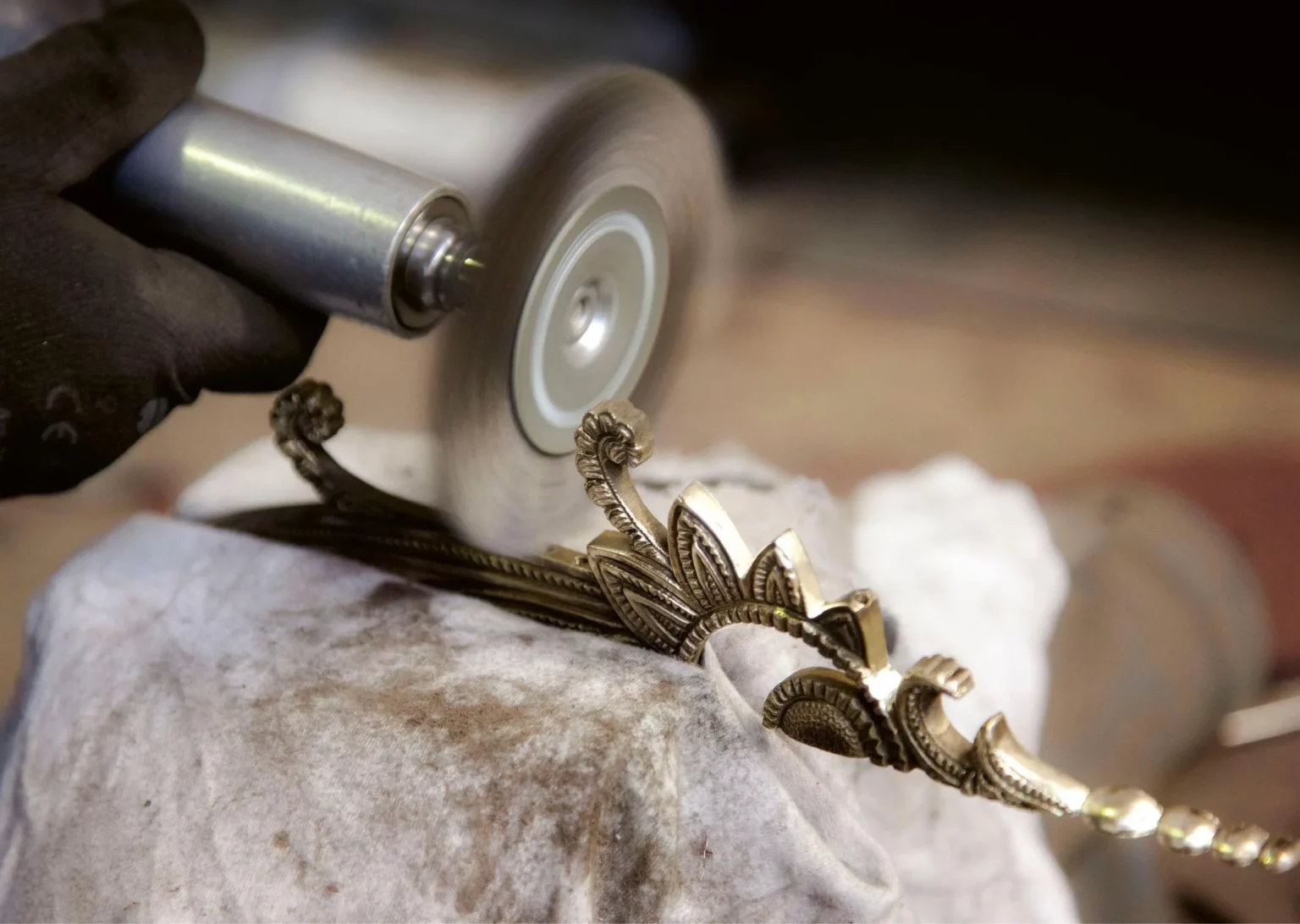
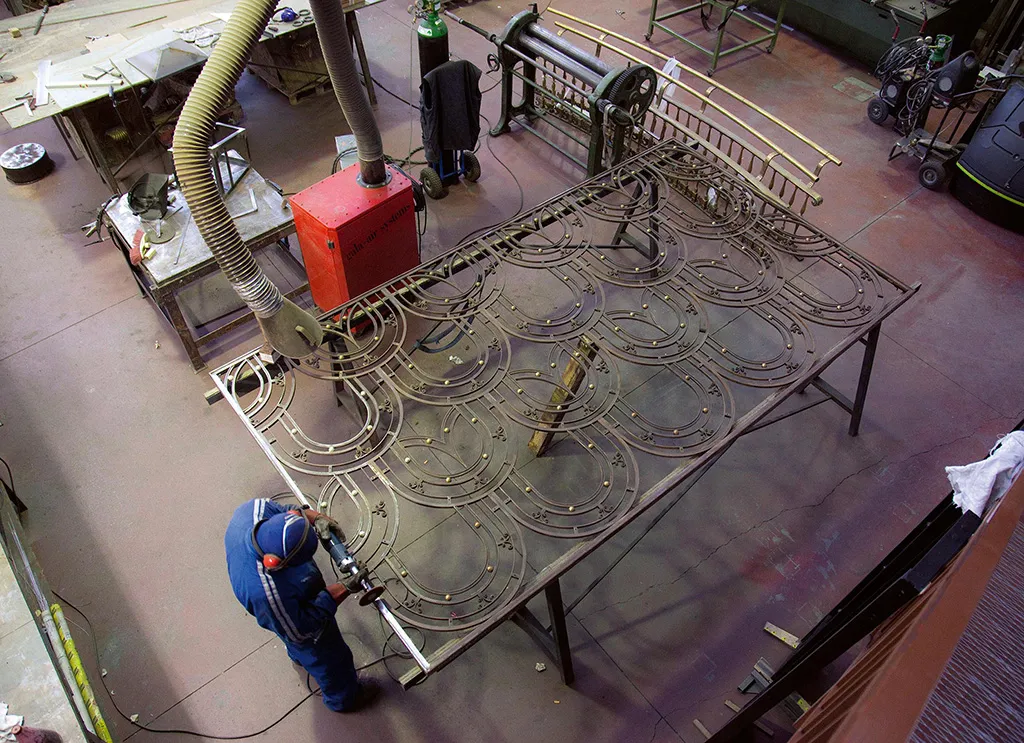
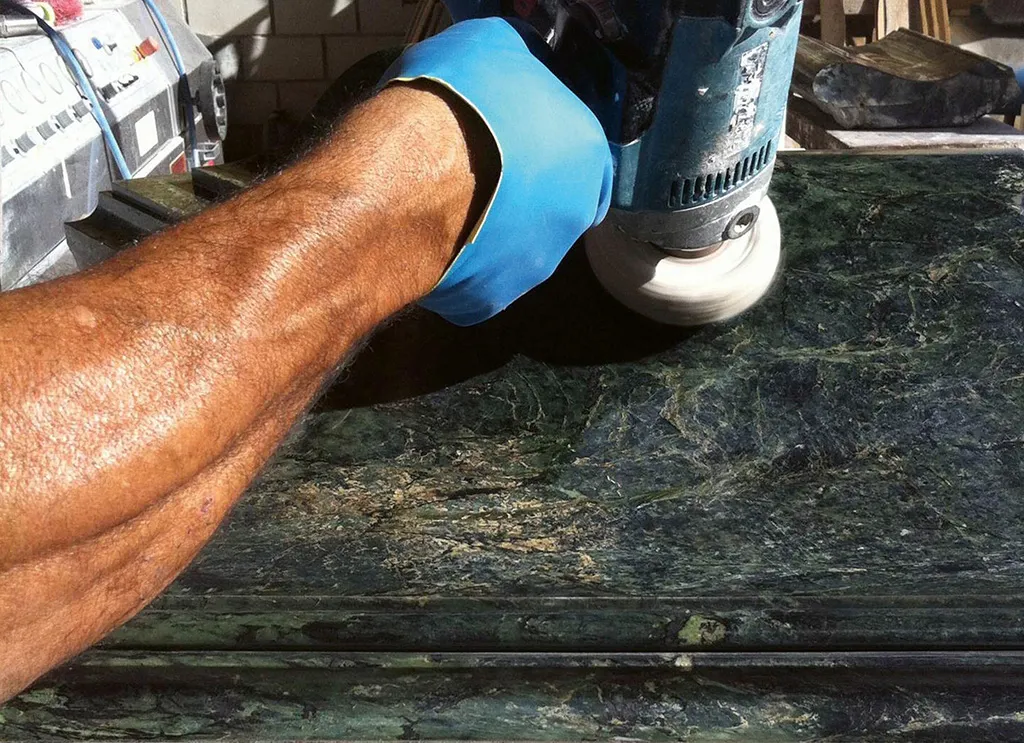
The painstaking work of cataloguing, dismantling and restoring unique items has been carried out by small local workshops that employ traditional craftsmanship in their restoration processes. They have preserved the aesthetic and historical value of each object through minimal intervention and the use of original techniques, thereby helping to ensure that each piece retains its identity despite the passage of time.
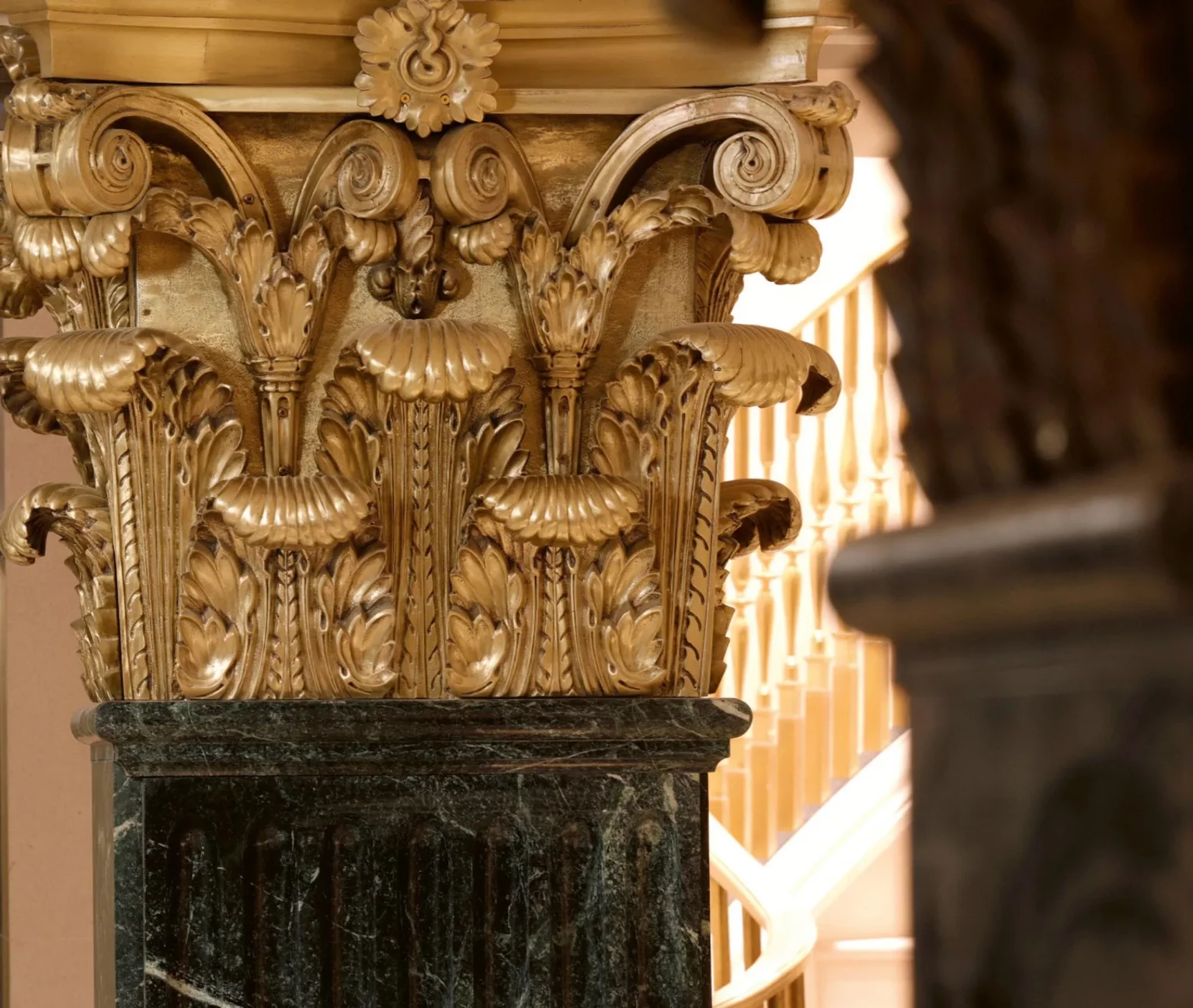
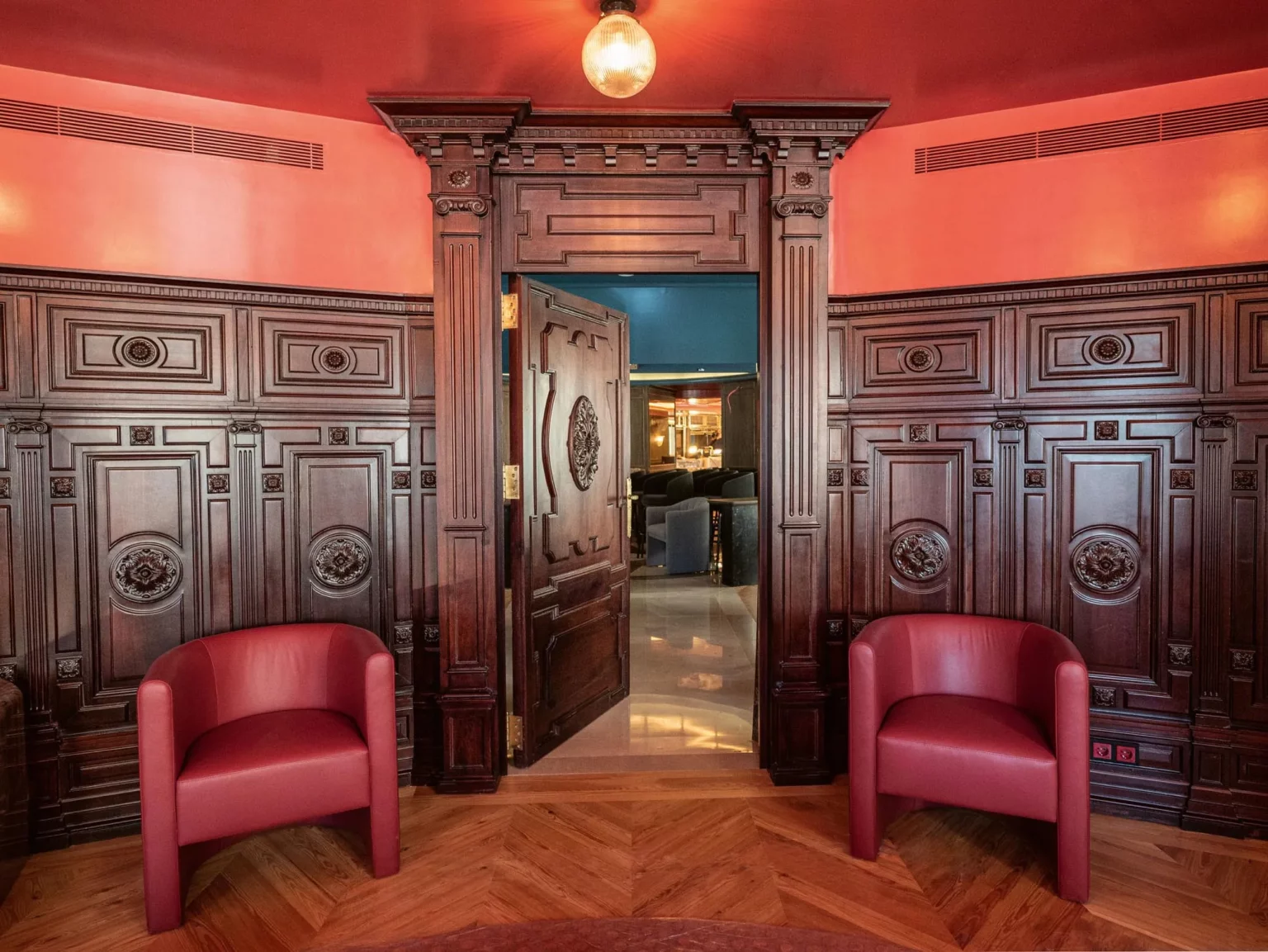
Behind the stunning façades, the buildings housed (and still house) true gems, such as the skylight, the old counters of the Banco Español de Crédito, the cladding on its pillars, and the capitals that can be seen in the hotel lobby. Also noteworthy are the fireplace and all the ceiling mouldings in the Royal Suite’s lounge and its marvellous pine flooring, which is a true work of marquetry; as well as the wood panelling in the red lounge, in one of FSHM’s restaurants, Isa, the restored doors in the rooms, the fireplaces, the reused ironwork and other smaller elements that help to give character to many corners of the building.
Facades
Its restoration is the finest example of the efforts to restore the area to its former glory.
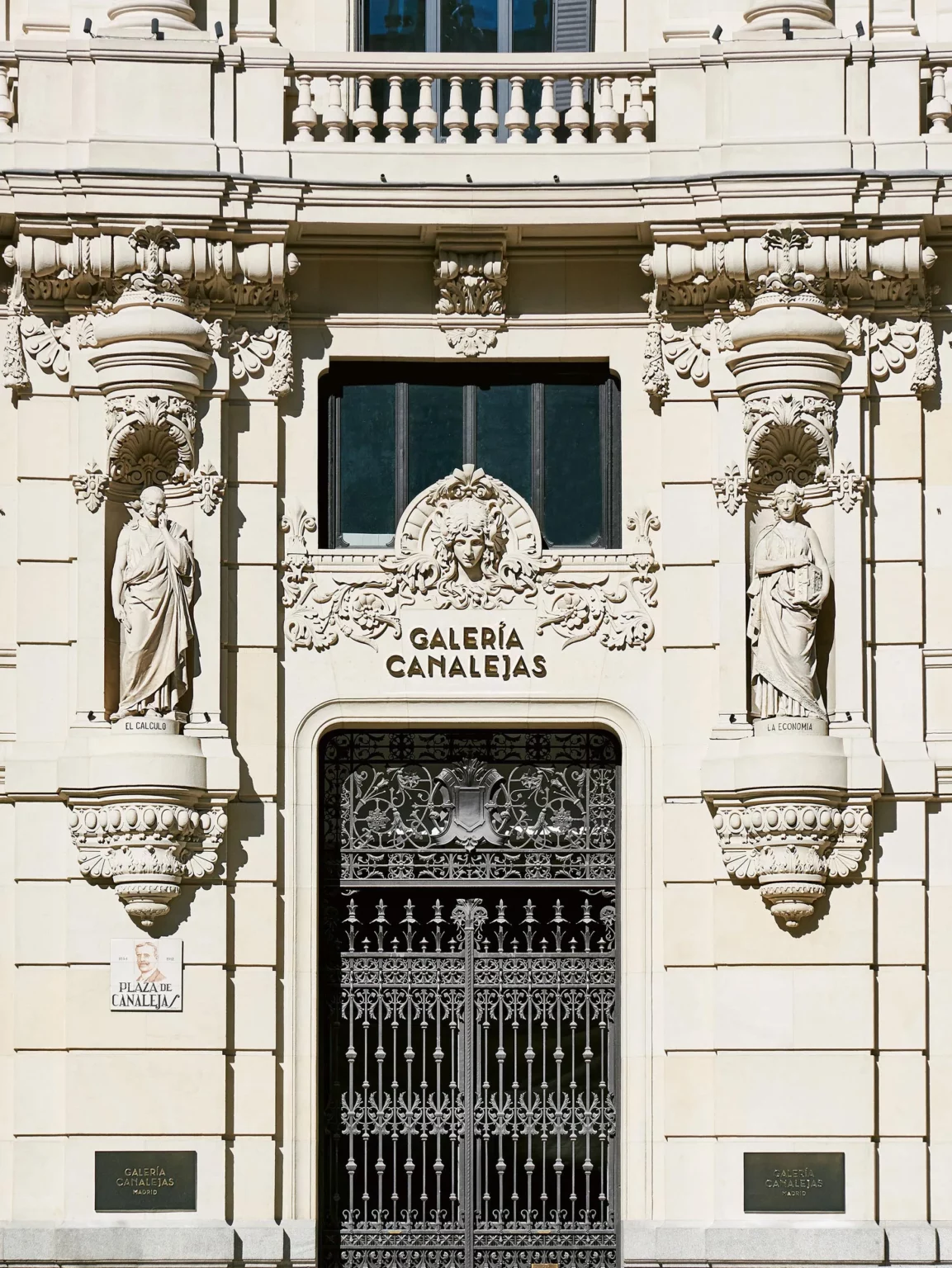
Notable among the most striking building facades are those at Plaza de Canalejas 1 (1902), an eclectic-style structure designed by architect Eduardo Adaro; the La Equitativa building at Alcalá 14 (1887), an example of 19th-century eclectic monumental architecture, designed by José Grases Riera; and Alcalá 10 (1943), designed by architect Roberto Ochoa in the Art Deco style, featuring a frieze by Frederic Marés Deulovol in relief on the lintel of the grand entrance, as well as other highly elaborate metalwork elements.
Vidriera
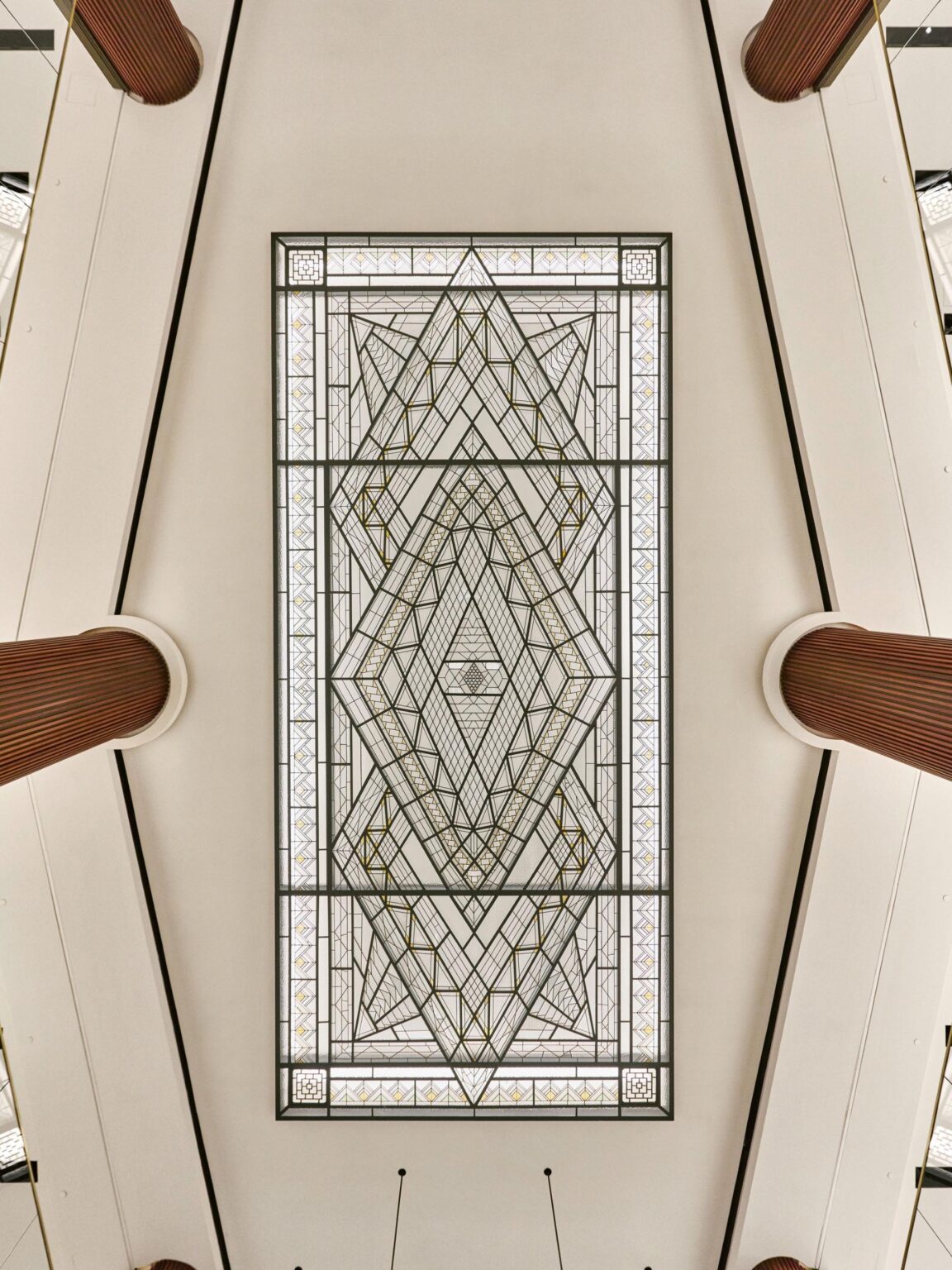
On the ceiling of the first floor of the building at 10 Alcalá Street are two Art Deco-style leaded-glass windows.
They are made up of glass panels of various shapes and sizes, forming a geometric composition of printed designs in clear, yellow or green, with a range of finishes.
The craftsmen who restored them encountered broken pieces, warped lead, missing putty and some unfortunate previous repairs that detracted from the stained-glass window. As a result, these had to be rectified using original techniques and materials dating from the 1940s.
Another example is the stained-glass window at 14 Alcalá Street, created by the renowned firm Maumejan, which features decorative techniques such as hand-drawn designs and hand-painting, with the original pigments fixed to the glass by firing it in a kiln. This technique, which has been used for centuries and was also originally employed in this piece, is the one that has been used to restore some of the glass that had been lost during previous restoration work, thereby altering the layout of the stained-glass window, which has now finally been restored to its original state.
Reja
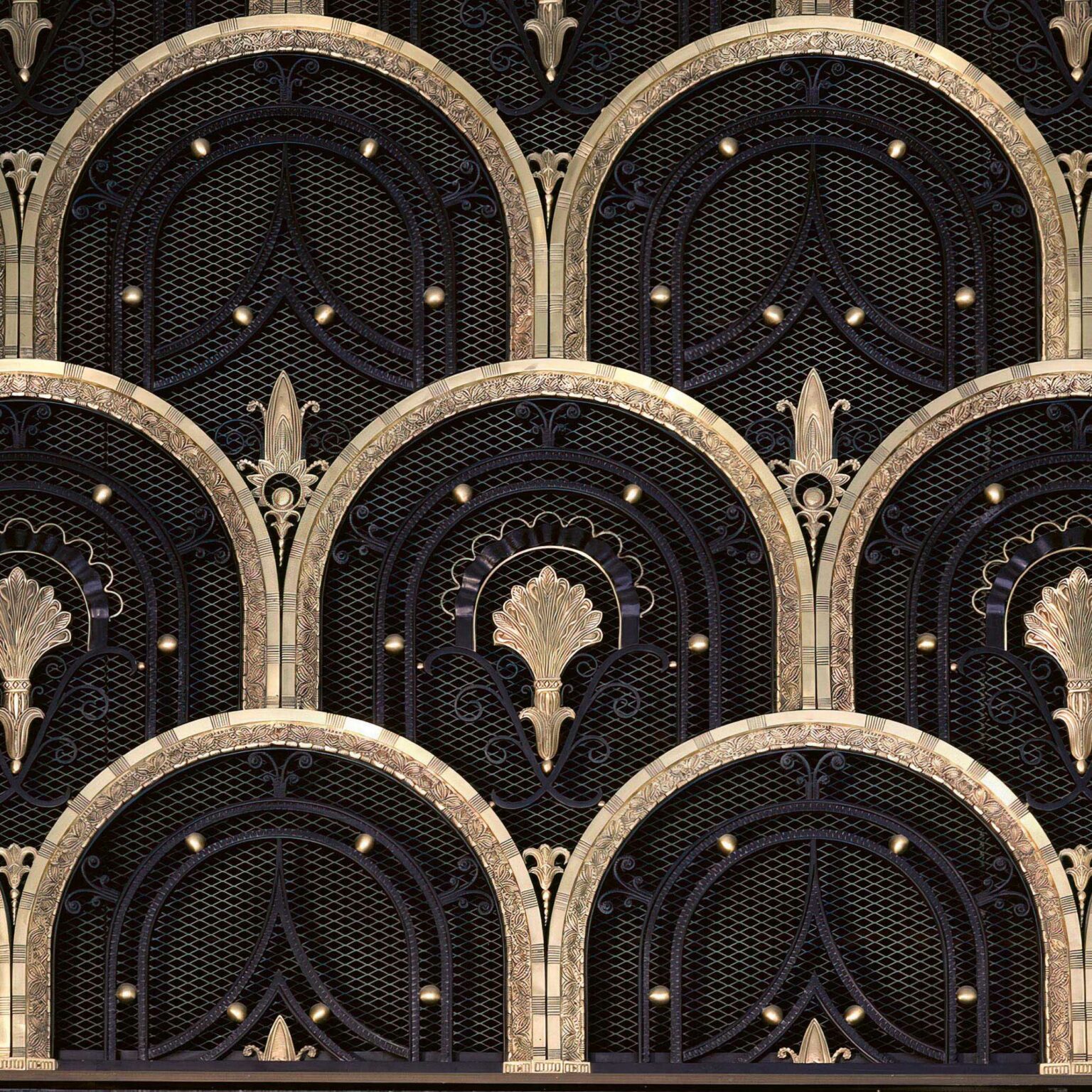
At the entrance to Alcalá 10 stood an object of great historical value:
a wrought-iron grille with bronze decorations, which had become badly damaged by successive layers of paint and varnish. During the restoration, its original colour and sheen were restored by cleaning and removing these layers of paint, as well as by removing rust wherever it had formed.
Stays
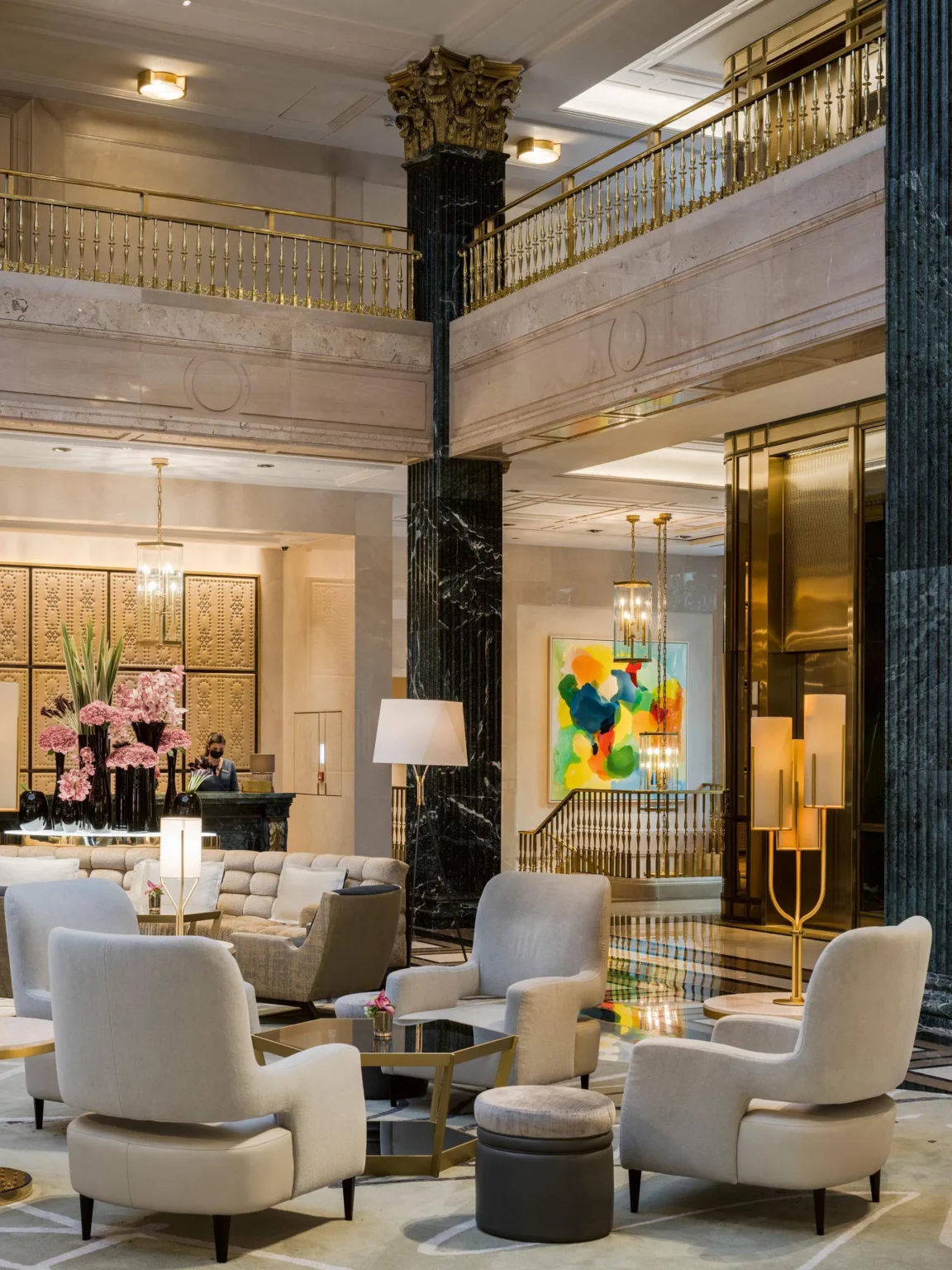
In what used to be the former trading floor of the Alcalá 14 building, designed by Enrique Cebrián,
This is now the reception area of the Four Seasons Hotel Madrid. Among its notable features, apart from the original glasswork of the inner courtyard, are the marble columns and the cast-bronze Corinthian capitals decorated with acanthus leaves – which were fitted to the pillars during the 1944 renovation – as well as the mahogany-stained woodwork and various types of ironwork.
A fascinating process
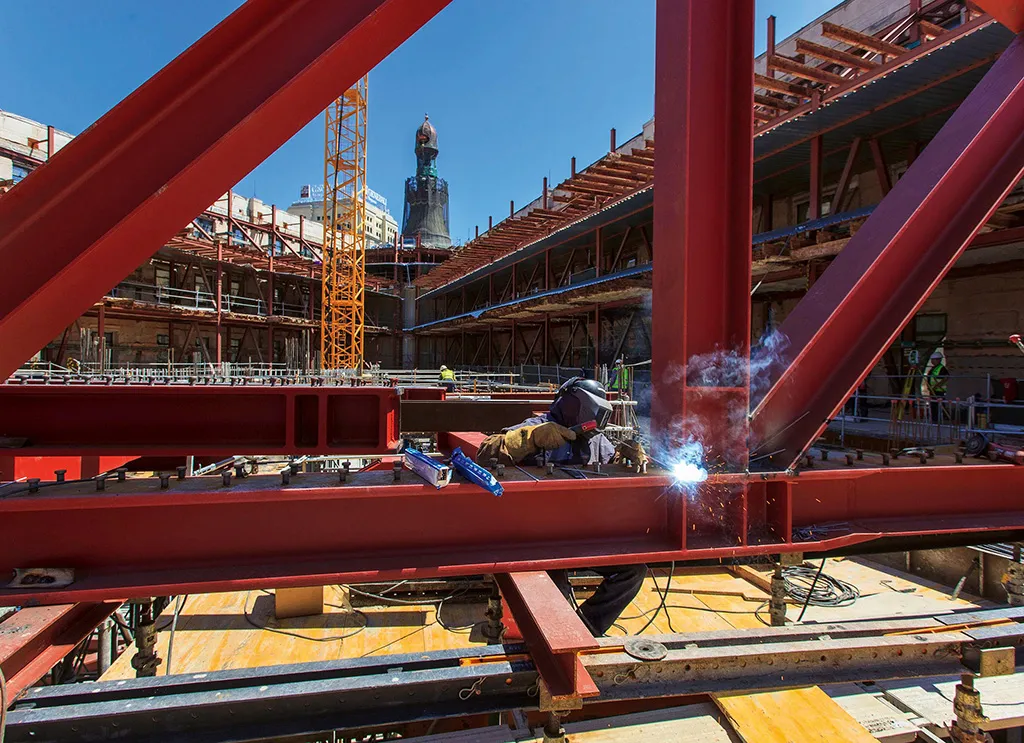
The refurbishment and new-build works at Centro Canalejas Madrid were carried out by the construction company OHLA between 2013 and 2020
5,000 jobs
Nearly 5,000 jobs have been created, including both temporary and permanent positions.
1,000 workers
At the height of construction, up to 1,100 workers were on site to build a development covering 80,000 m², 30,000 m² of which is below ground level.
A change of scale
The impact and significance of the project and the works have necessitated a shift in scale in terms of their planning and execution, as well as a holistic approach to coordinating the simultaneous progress of the various works, which also have an urban dimension.
Spatial and functional redefinition
Almost epic difficulty
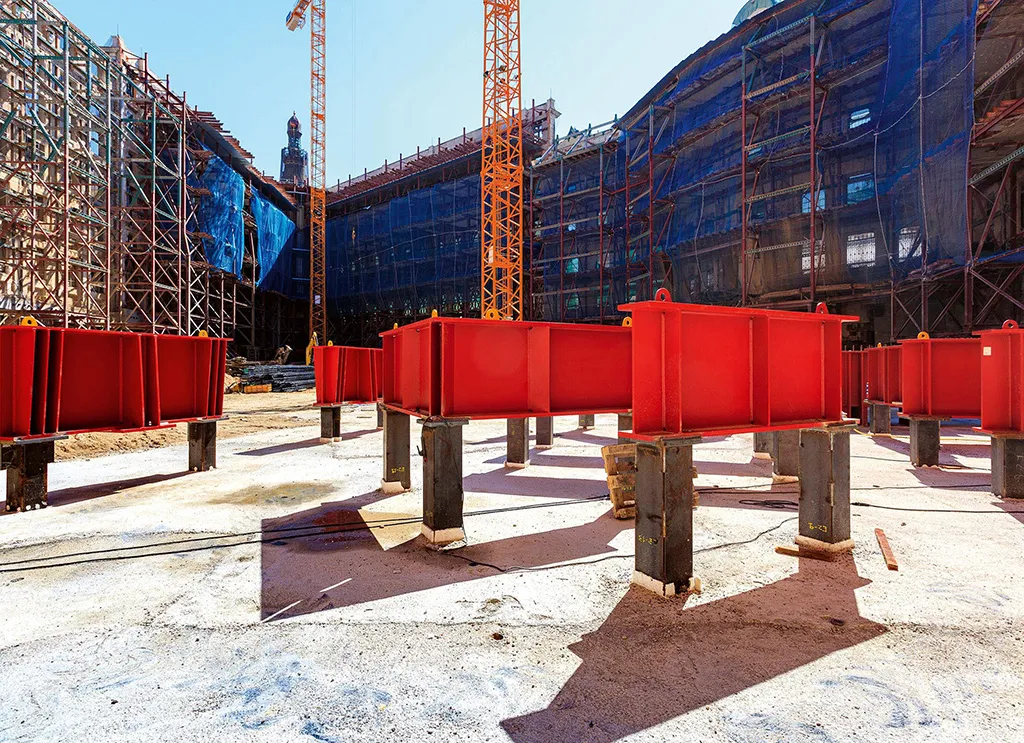
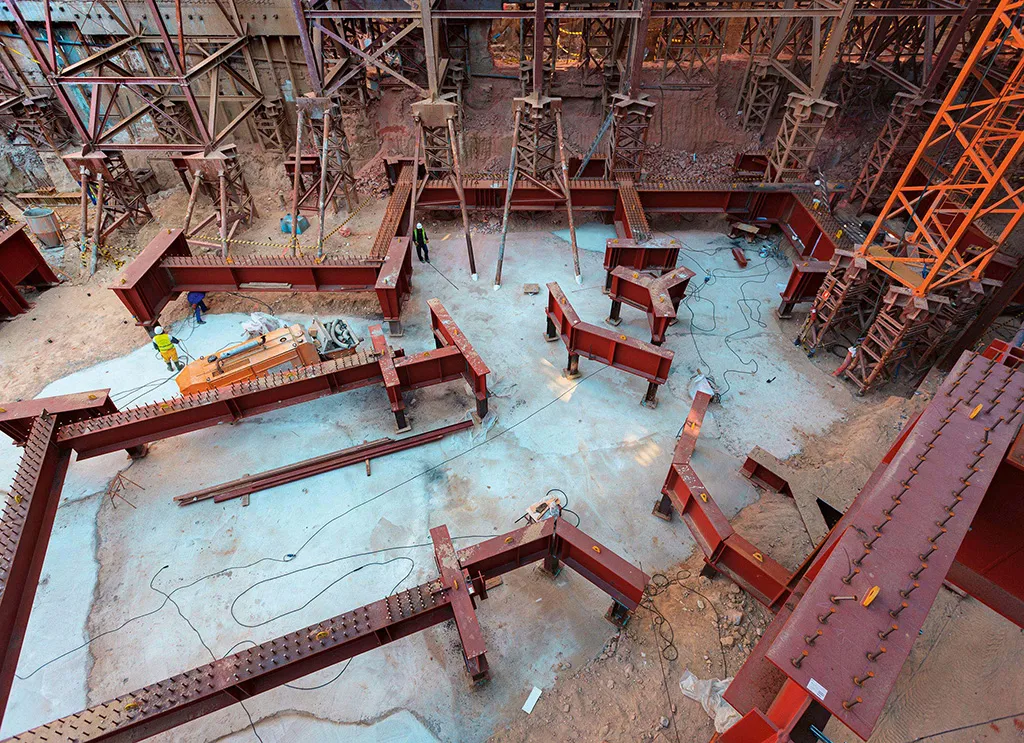
Adding three basement levels beneath the two existing ones in a densely built-up area has made the work an almost Herculean task.
An automated surveying control system
The complexity of the project has necessitated the use of the most innovative construction techniques, materials and systems. One example is the implementation of an automated topographic monitoring system to continuously monitor the stability of the facades as a whole.
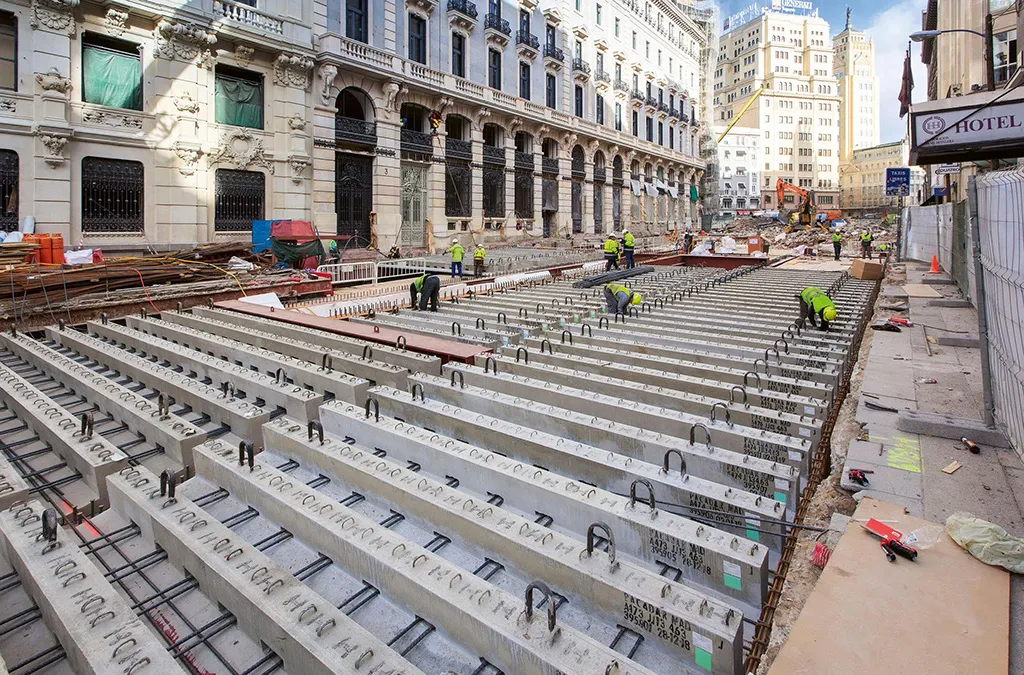
A transition slab
Although the most notable feature is the use of a transition slab, which made it possible to carry out work both below and above ground level simultaneously.
A large courtyard
The interior of the building is newly constructed, with a floor plan based on a radial design that creates a large inner courtyard; the hotel features a vertical garden and a new façade with latticework inspired by the original features of the complex, providing natural ventilation and lighting for all floors.
Different room types
A different layout of rooms is arranged around this courtyard, contrasting with the rooms that face the façade.
There are a total of 32 elevators in the building
Each section of the building (hotel, shopping centre, residential units and car park) has its own lifts, with the exception of the shared goods lifts, which connect the loading and unloading area with the service areas and facilities on each floor.